The Film
Watch the ProtoFilm
First cut — a proof of concept exploring the visual language, pacing, and emotional arc of the story.
Acts 8 ProtoFilm — 1st Cut — January 2025
The Story of Philip and the Ethiopian
Based on Acts 8:26-40First cut — a proof of concept exploring the visual language, pacing, and emotional arc of the story.
Acts 8 ProtoFilm — 1st Cut — January 2025
An angel sends Philip south along a desert road, where he encounters an Ethiopian court official struggling to understand the prophet Isaiah. What follows is one of the most beautiful conversion accounts in scripture — a meeting orchestrated by God, a conversation that changes a life, and a baptism in the wilderness.
A short narrative film told across 8 acts, designed to bring the biblical text to life through careful visual storytelling. Estimated runtime: 12–15 minutes. Shot with a cinematic aspect ratio and natural lighting to evoke the ancient world with modern craft.
Warm, reverent, and deeply human. The film balances the supernatural elements — angelic visitations and the Spirit's direction — with grounded, intimate performances. Every frame breathes. Every silence means something.
One of the seven appointed by the apostles. A man of deep faith and infectious warmth. When the spirit moves, Philip doesn't hesitate — he runs. His joy in sharing truth is genuine, unforced, and immediately disarming. He approaches strangers not with formality but with a twinkle in his eye.
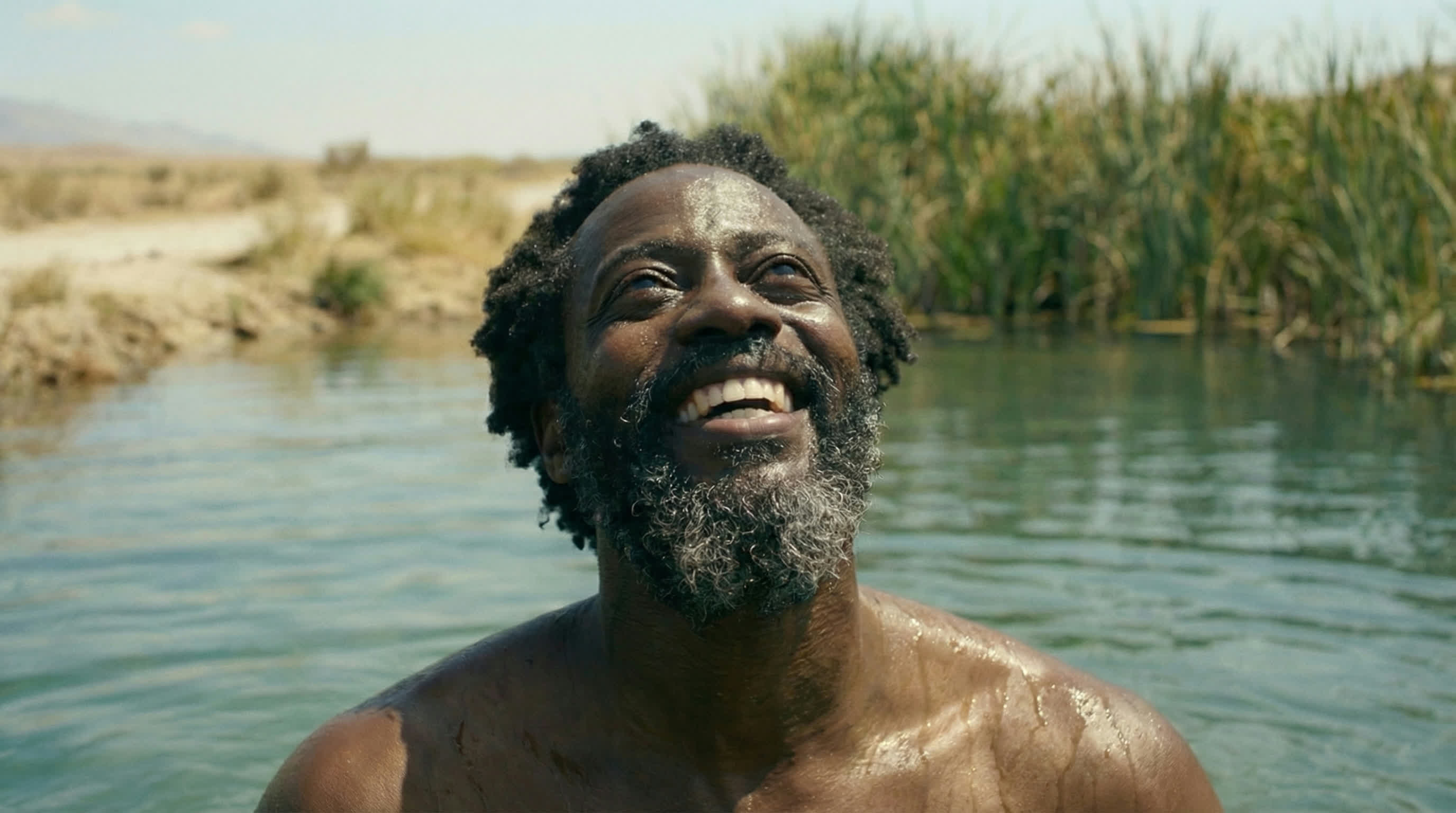
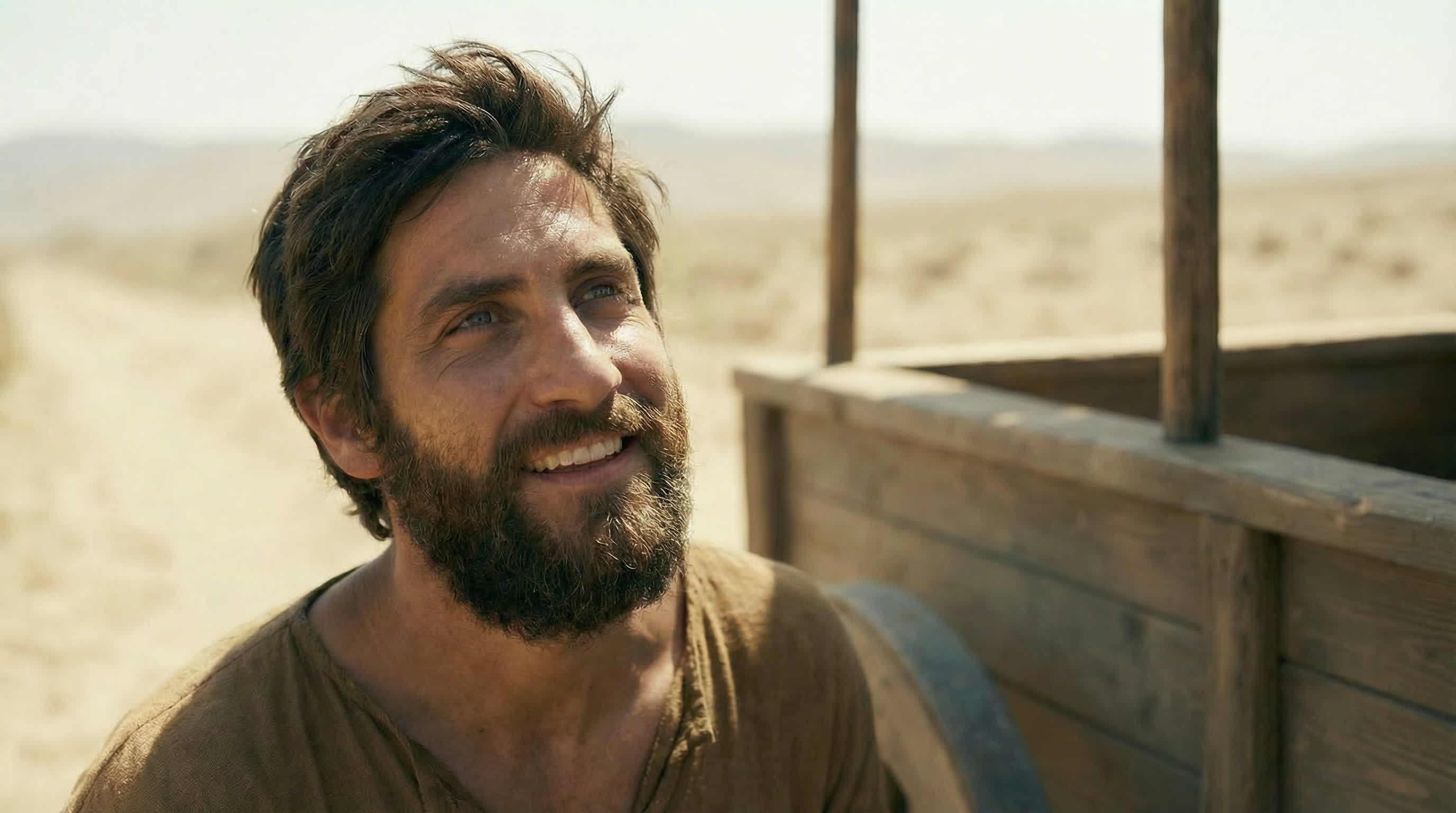
A man of authority and wealth — treasurer to Queen Candace of Ethiopia. Gold rings, heavy signet, fine fabric. Yet beneath the status is genuine humility and hunger for understanding. His laugh is big and hearty. His questions are earnest. When truth lands, his whole face lights up.
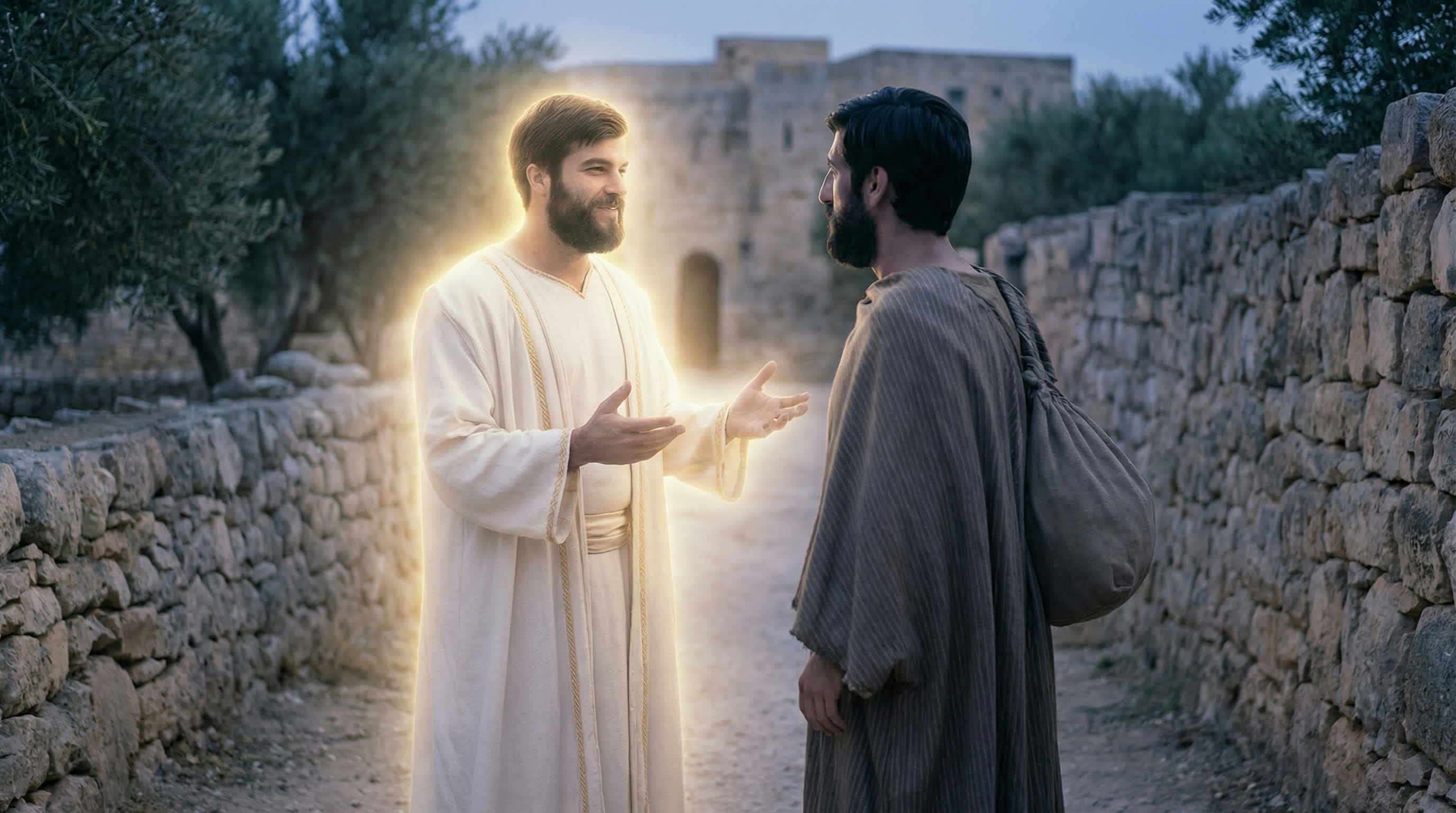
Appears briefly but pivotally. His presence is announced not with thunder but with goosebumps — the fine hairs on Philip's arm rising. A calm, smiling figure whose simple instruction sets the entire narrative in motion. The catalyst.
The voice that carries the biblical text. Measured, reverent, unhurried. The narration follows the scripture closely, giving space for the visuals to breathe. Each line is delivered with quiet authority, allowing the story's natural drama to emerge.
Warm. Reverent. Human. This is not a stiff biblical re-enactment — it's a story about two real people having a genuine encounter. The tone walks the line between cinematic grandeur (desert landscapes, golden light, sweeping score) and intimate humanity (a laugh, a curious glance, goosebumps on an arm). The audience should feel like they're watching a moment that actually happened, not a Sunday school illustration.
Earthy, desaturated palette with warm golden tones. Natural lighting wherever possible — magic hour for the lodging scene, harsh midday sun on the desert road, soft diffused light inside the chariot. Close-ups carry emotional weight: hands on scrolls, hairs rising on skin, eyes lighting up with understanding. Wide shots establish the vastness of the journey and the smallness of these figures against the landscape.
The film breathes. The opening is still and quiet — evening air, a man at rest. The angel's appearance is subtle, not explosive. Then momentum builds: Philip packs quickly, walks with purpose, breaks into a run. The chariot sequence is the heart of the film — unhurried, conversational, full of warmth. The baptism is the emotional peak. And the departure is bittersweet but joyful — two strangers who shared something profound, parting with a wave and a smile.
A powerful man with every worldly resource at his disposal couldn't understand the most important thing he'd ever read — until a stranger, guided by something beyond himself, ran alongside his chariot and simply asked: "Do you know what you're reading?"
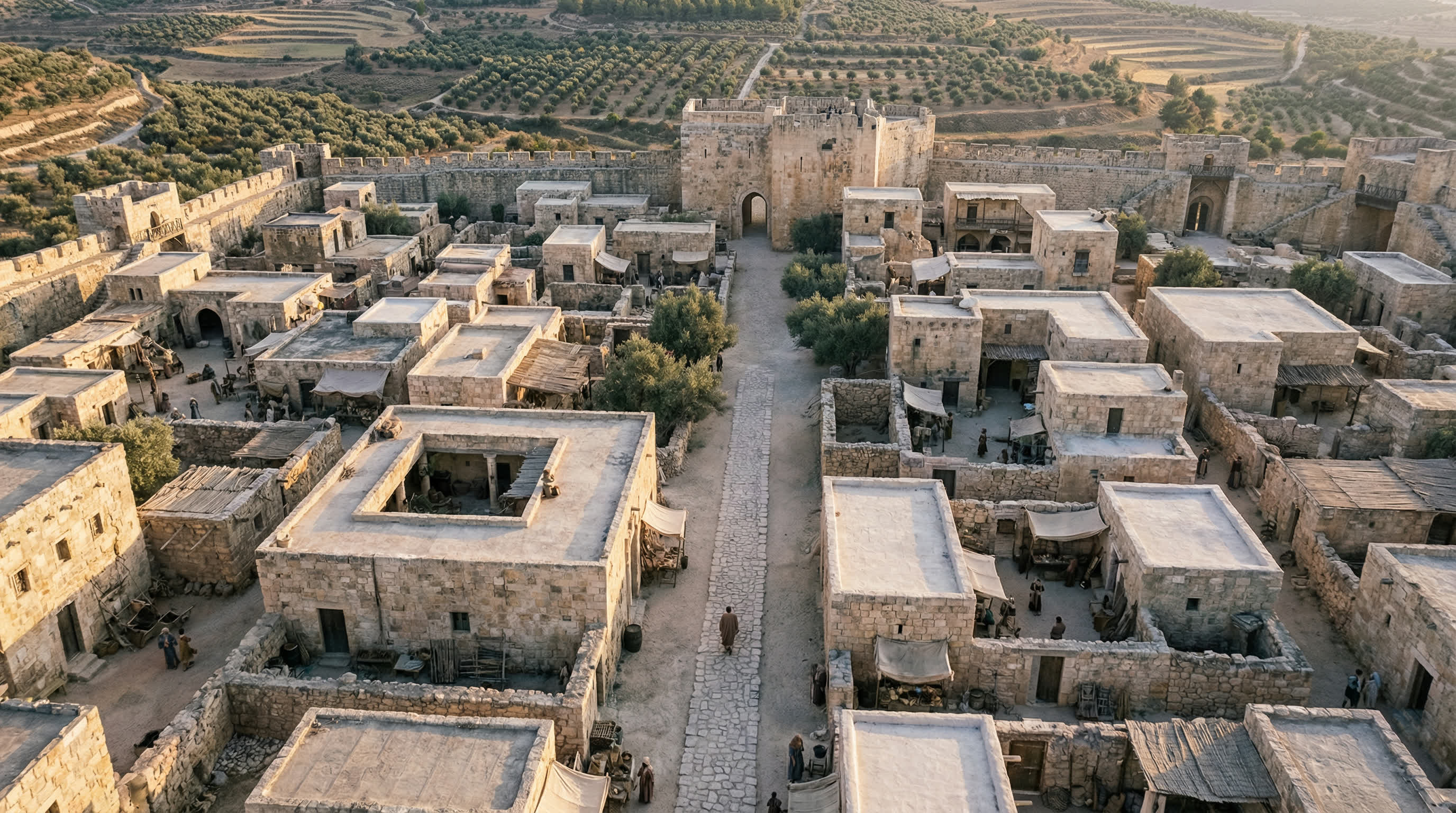
Philip is inside a modest home. He finishes chatting with a couple and warmly says goodbye. He stays outside and sits. Evening settles. The fine hairs on his arm slowly rise. Philip looks up and turns around — in awe as he sees the angel.
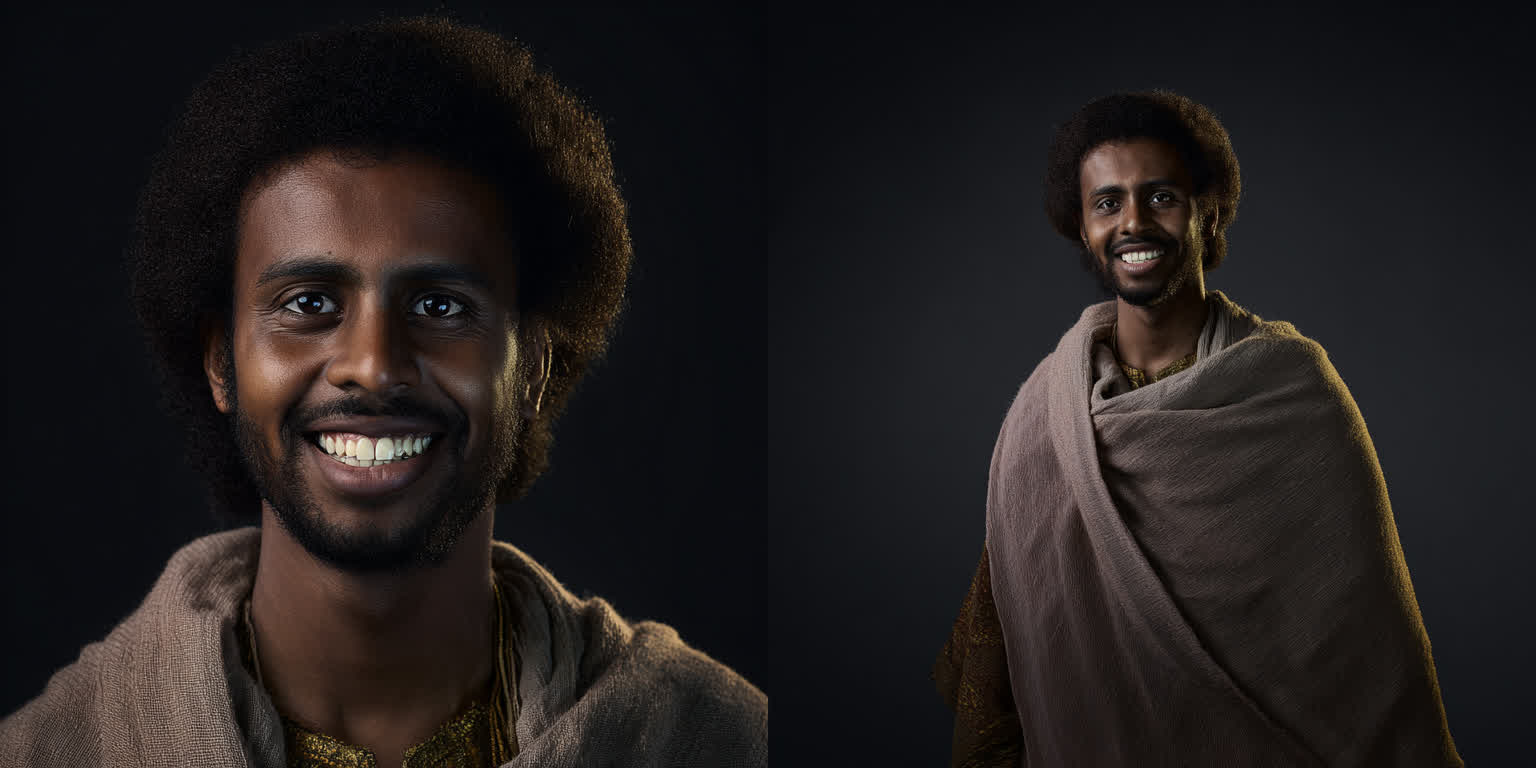
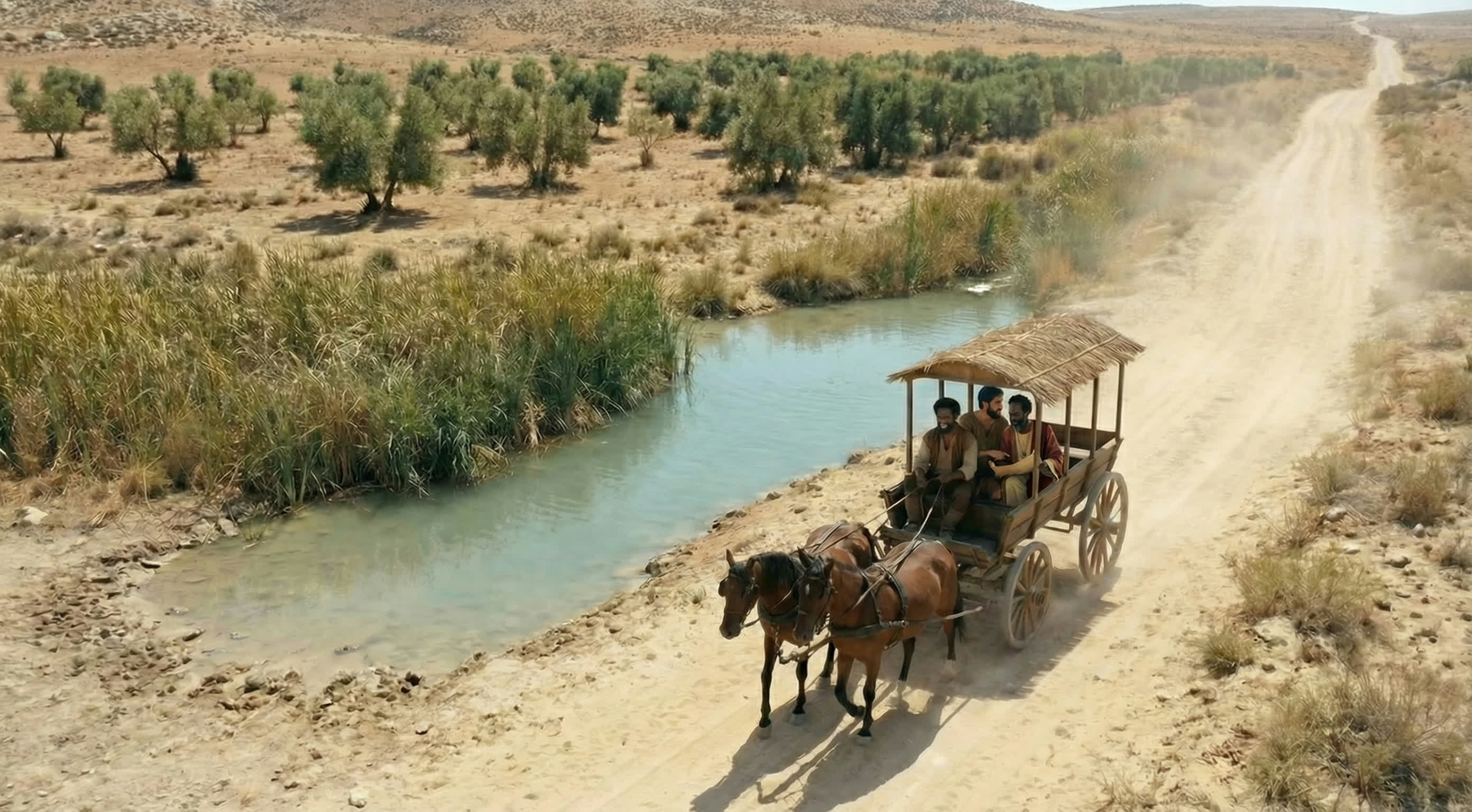
Philip walks with purpose down a long desert road.
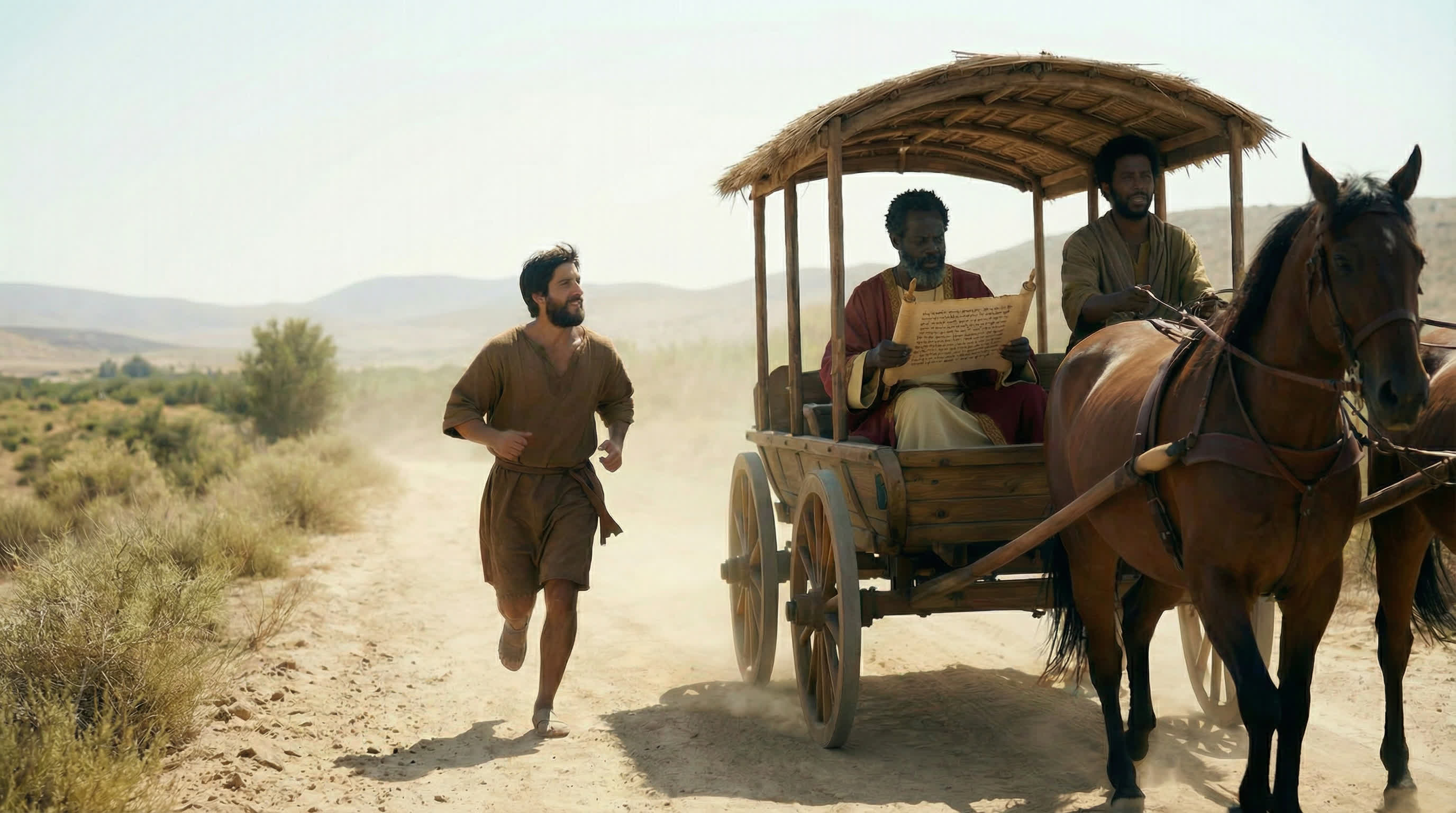
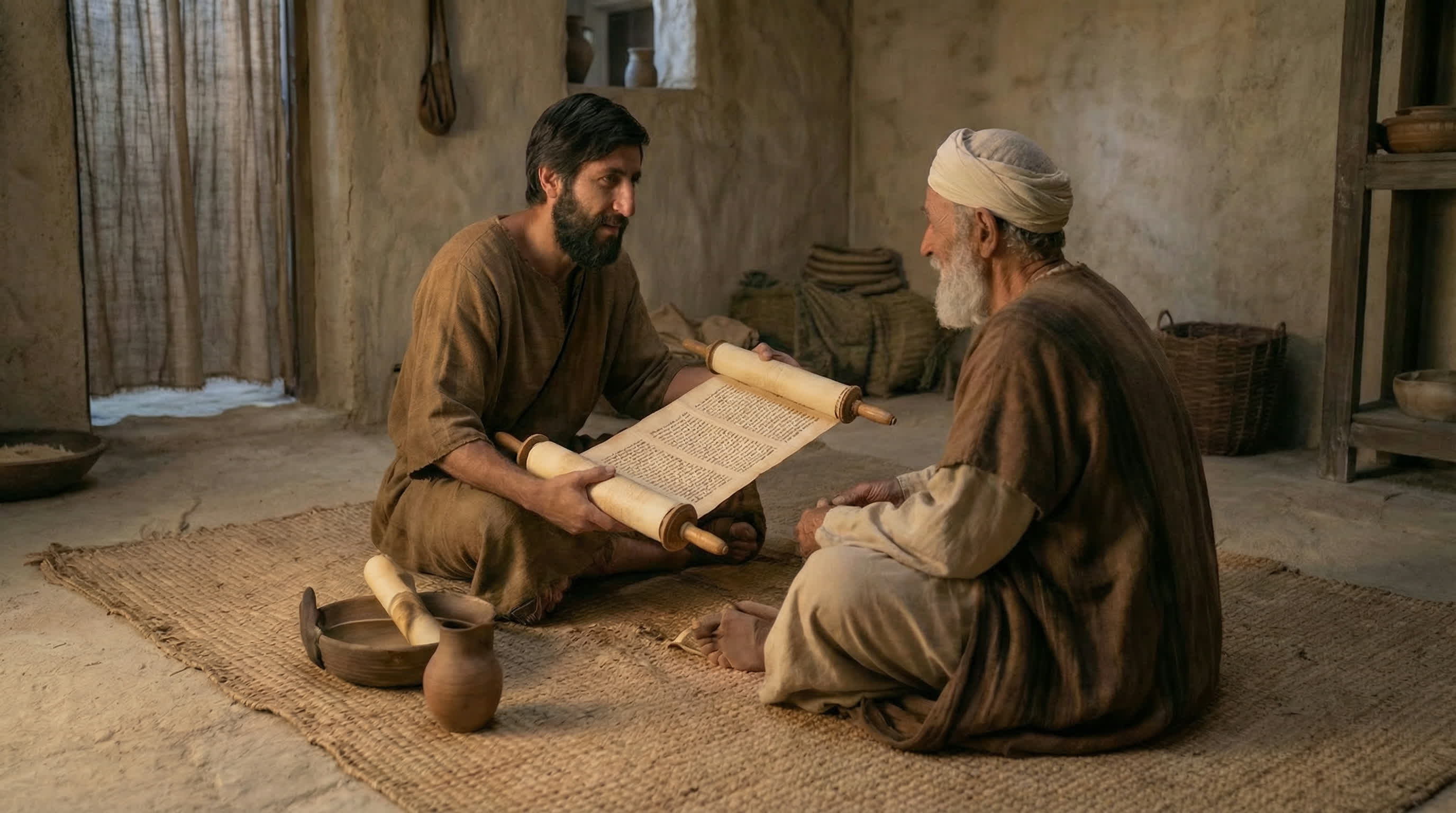
Close on hands holding scroll. Dark skin, gold rings, heavy signet. The Ethiopian eunuch reads aloud to his driver.
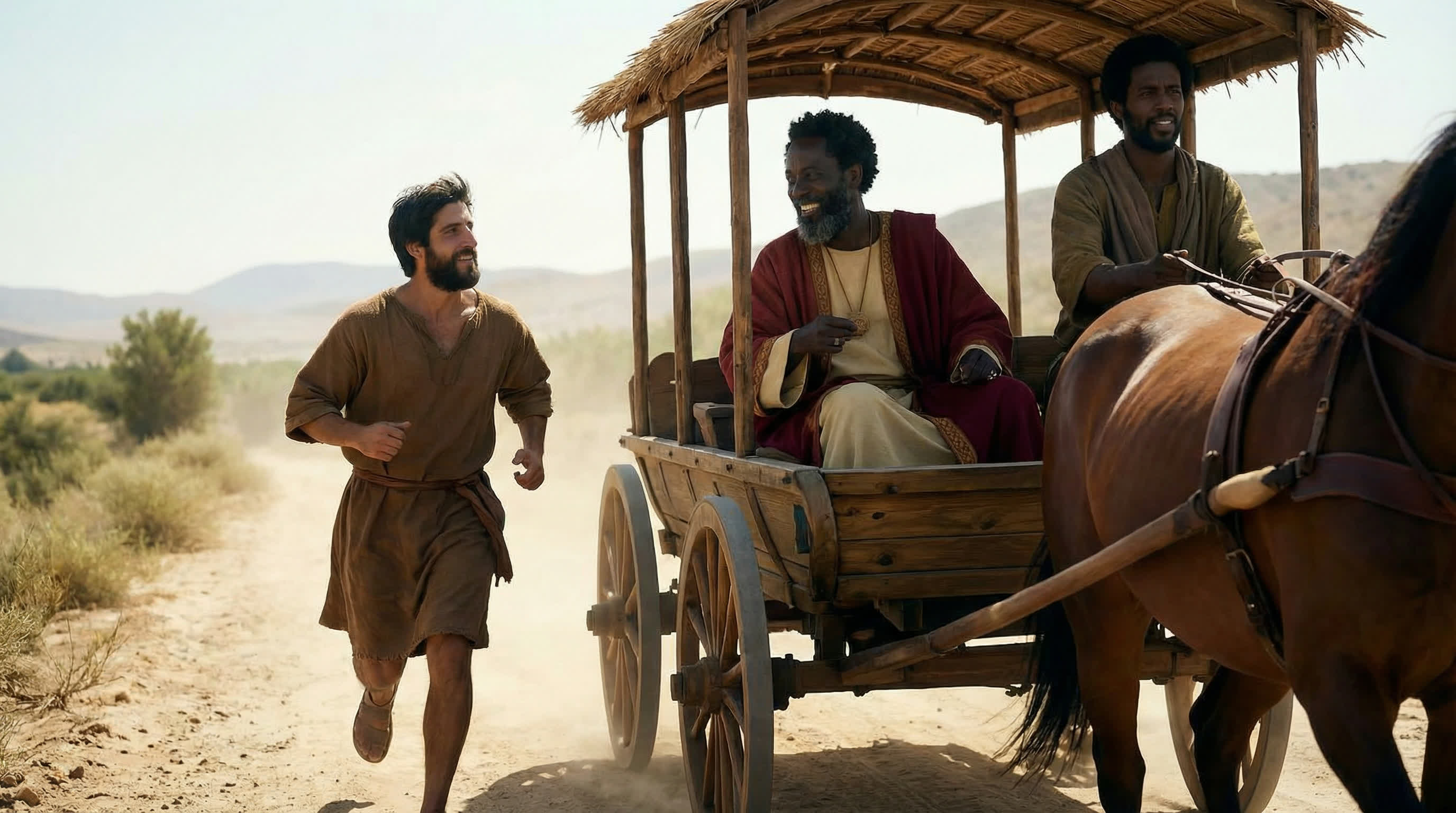
Philip catches sight of the chariot, smiles and breaks into a run.
He gestures excitedly for Philip to join him.
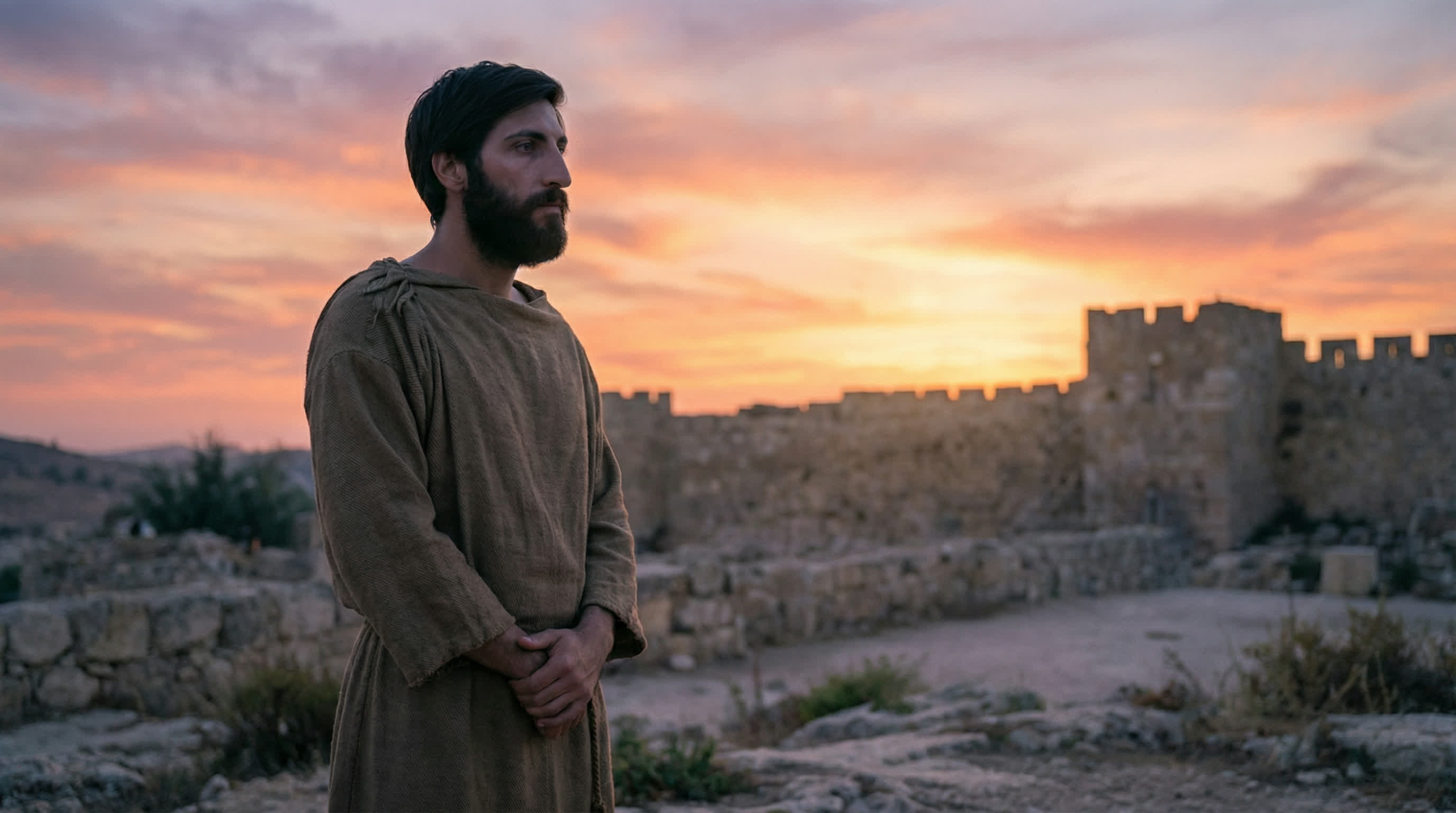
The Eunuch reads from Isaiah:
Philip begins teaching about Jesus, pointing at verses, rolling the scroll.
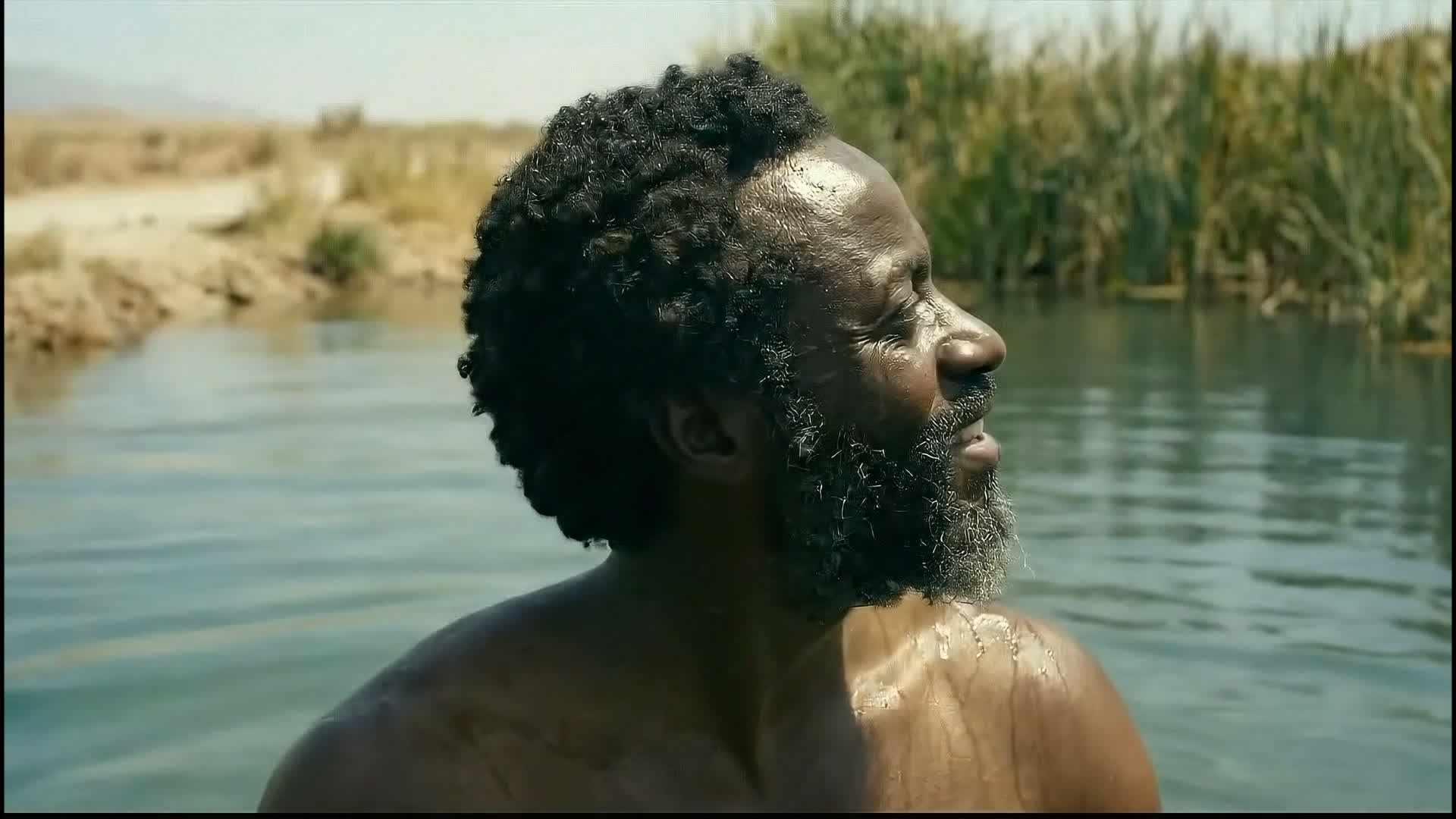
They enter the water. The baptism is calm and reverent. The eunuch is joyful.
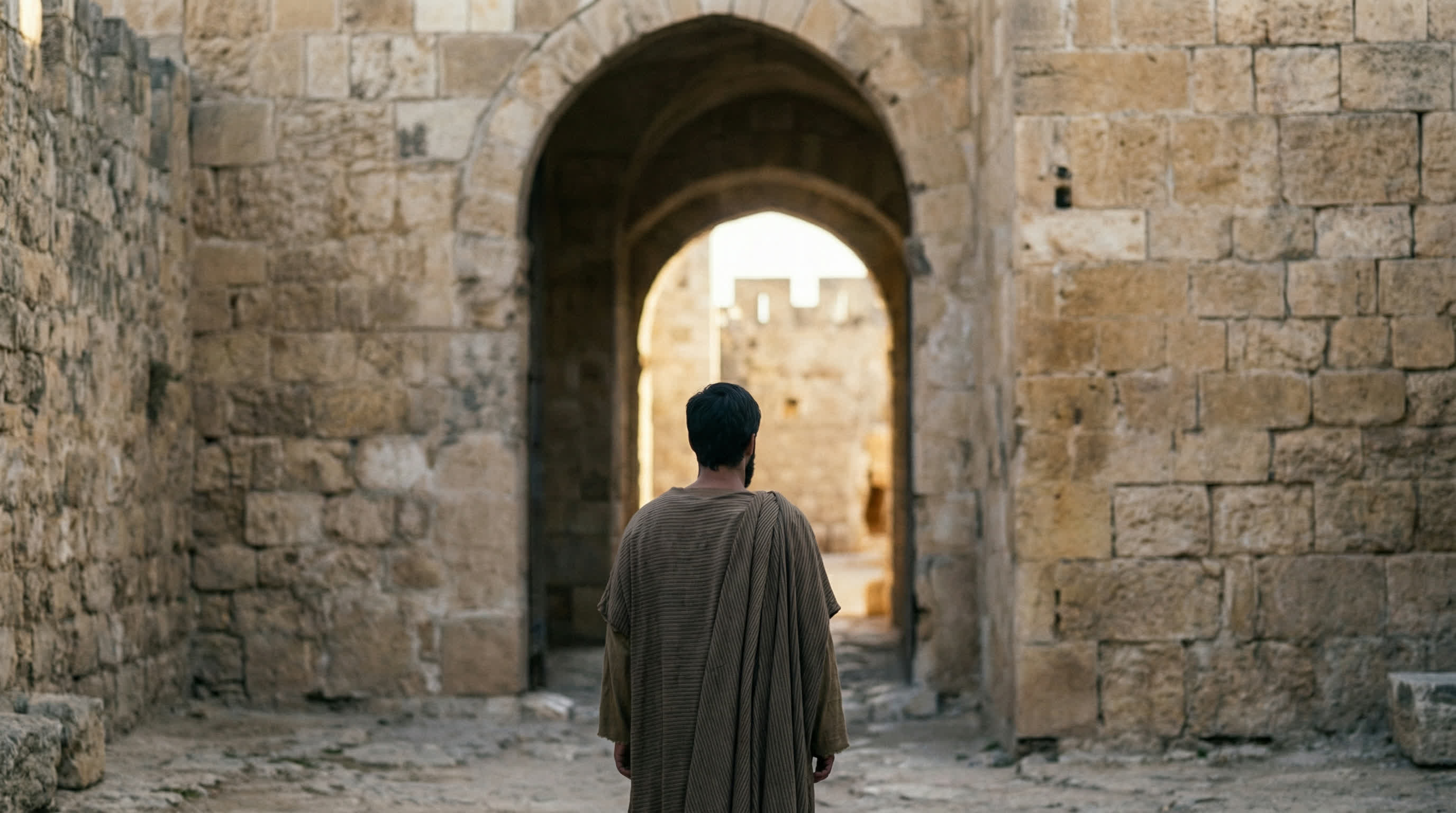
Philip walks into the sunset. The eunuch waves goodbye, laughing and embracing his attendant.
The original piano-focused score sets the emotional architecture of the film. Composed to evoke the quiet weight of the ancient world — the stillness of a desert road at twilight, the intimacy of scripture read aloud, the joy of transformation. The melody is unhurried, giving each scene room to breathe, anchoring the narrative in reverence without sentimentality.
Acts 8:26-40 is one of the most compact and complete stories in scripture. An angel, a desert road, a question, a teaching, a baptism, and a departure. It has the structure of a perfect short film already written — we just have to honor it visually.
The visual language is warm and grounded. Natural light drives every scene — golden hour for the angel's visitation, harsh midday sun on the desert road, soft reflected light inside the chariot. We want the audience to feel the heat, hear the silence, sense the weight of the scroll in the eunuch's hands.
Performance is everything. The Ethiopian eunuch is not a passive figure — he is a man of authority, intellect, and genuine curiosity. His laughter when Philip arrives is the laughter of someone who has been waiting for this moment without knowing it. Philip is urgent but not anxious — a man who has learned to follow divine direction with his feet already moving.
The baptism scene is the emotional center. No grand orchestral swell — just water, two men, and the quiet certainty that something has changed forever. The eunuch's joy afterward is not performative; it is the deep, settled joy of a man who has found what he was searching for.